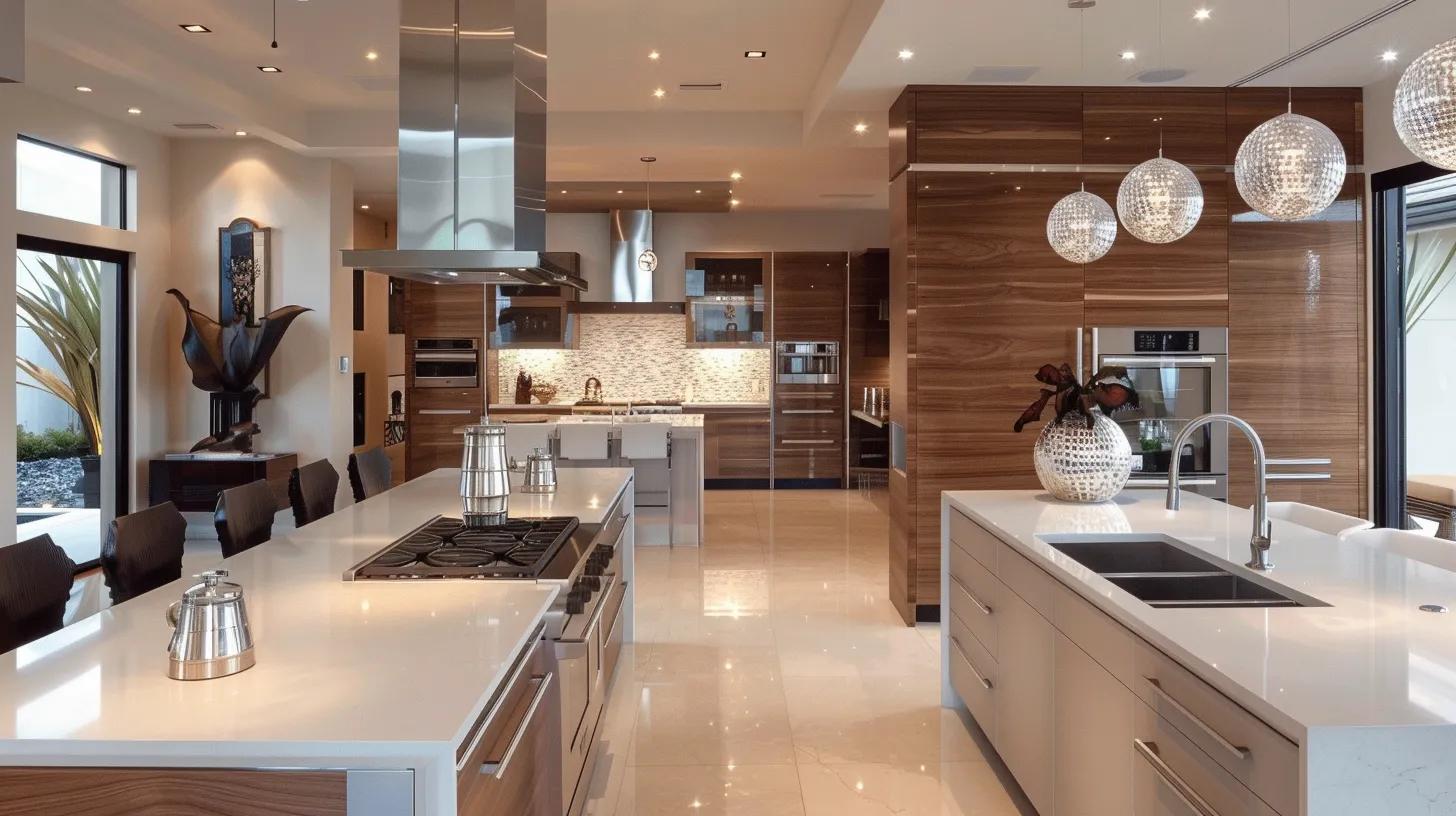
Choosing the right kitchen layout is the first step toward a functional, beautiful home hub that supports daily routines and adds resale value. A kitchen layout is the spatial arrangement of cabinets, appliances, counters, and work zones that shapes how people move, cook, and socialize; understanding layout types helps you plan renovation choices that improve flow and efficiency. This guide explains major kitchen floor plans such as L-shaped, U-shaped, galley, one-wall and island/peninsula arrangements, and gives build-ready metrics for clearances, appliance placement, and ergonomics. You’ll learn how to match a layout to your room dimensions, cooking habits, and entertaining style, how the kitchen work triangle and modern work zones affect efficiency, plus practical island sizing and storage strategies that make small kitchens perform like larger ones. Read on for step-by-step planning, small-space solutions, and integrated advice that moves a concept into a buildable plan.
Kitchen layout refers to the overall plan that positions counters, appliances, and circulation paths to support tasks like prepping, cooking, and cleaning. Popular layouts—L-shaped, U-shaped, galley, one-wall, and island/peninsula—differ in their footprint, storage capacity, and traffic flow, and each offers specific benefits depending on room size and open-concept goals. Choosing among them depends on structural openings, whether you need seating, and the number of simultaneous cooks; efficient layouts balance the work triangle with clearances to reduce fatigue and collisions. Below is a concise comparison to help homeowners quickly assess which layout type aligns with their space and priorities.
Different layout types suit distinct homes and lifestyles:
| Layout Type | Pros | Ideal Space |
|---|---|---|
| L-shaped kitchen layouts | Flexible work zones; corner storage; island-compatible | Open-plan living rooms, medium rooms |
| U-shaped kitchen layouts | Maximum counter and storage; efficient zones | Larger kitchens, separate rooms |
| Galley kitchen layouts | Highly efficient linear workflow; excellent for narrow spaces | Narrow apartments, corridors |
| One-wall kitchen | Space-saving; simple circulation | Studios, small condos |
| Island/peninsula layouts | Added prep, seating and storage; social hub | Open-plan kitchens with room for circulation |
This table clarifies how footprint and function relate: pick a layout that matches circulation constraints and your storage needs. Understanding these pros leads naturally to examining specific layout geometries in more detail.
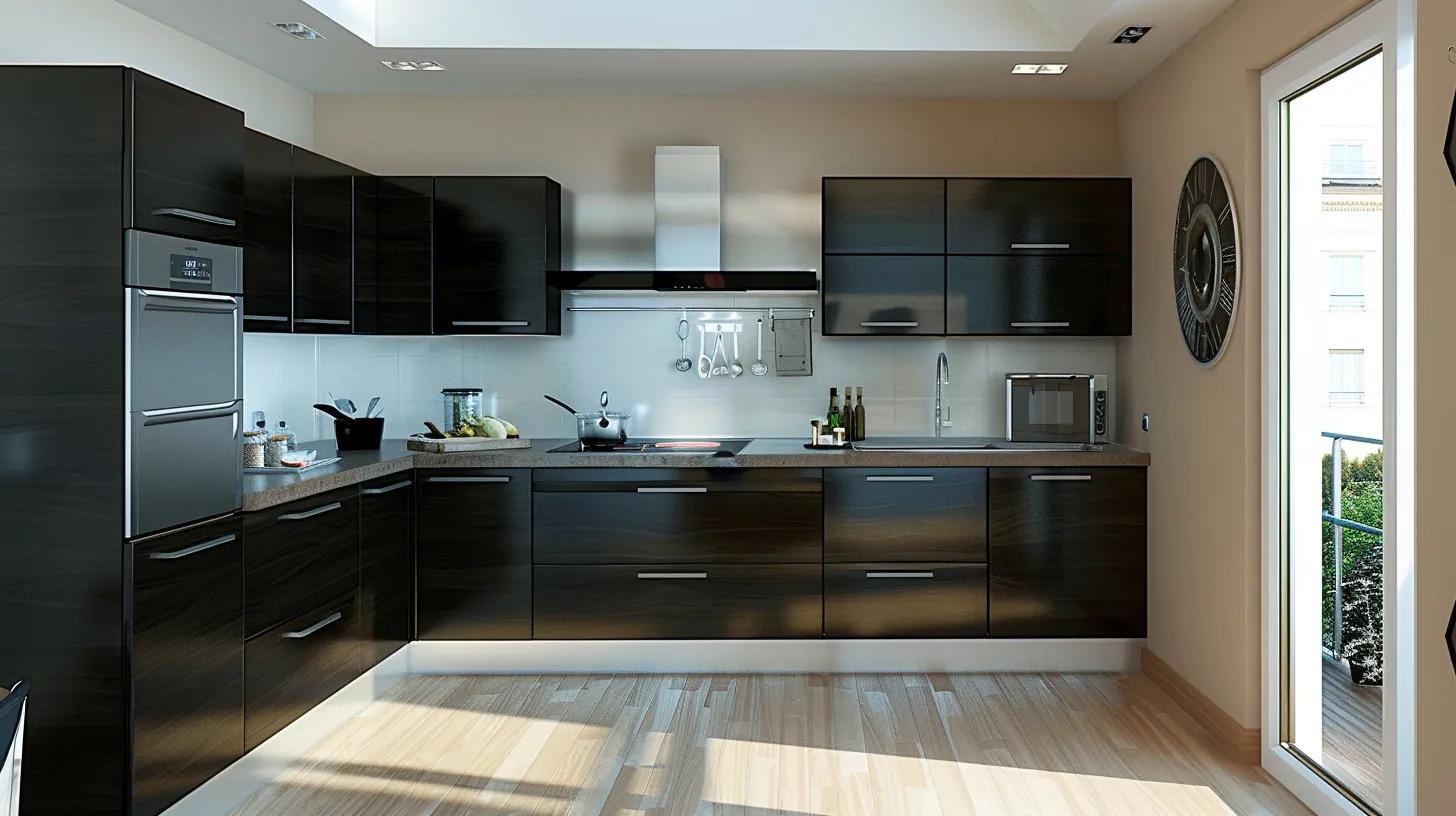
An L-shaped kitchen design uses two adjoining walls to form a right angle, creating distinct work zones that reduce cross-traffic and allow an island or dining piece in larger footprints. This geometry supports an efficient kitchen work triangle by separating cooking and prep areas while offering flexible storage solutions in base and wall cabinets. Designers often pair an L-shape with corner solutions like lazy Susans or diagonal drawers to reclaim otherwise wasted space and maintain smooth cabinet access. Recommended clearances include 36–48 inches of aisle space for single- to multi-cook households, and designers should consider appliance placement to avoid blocking major traffic paths. Knowing these fundamentals helps homeowners decide whether an L-shaped plan will deliver the balance of storage, workspace, and sociability they want.
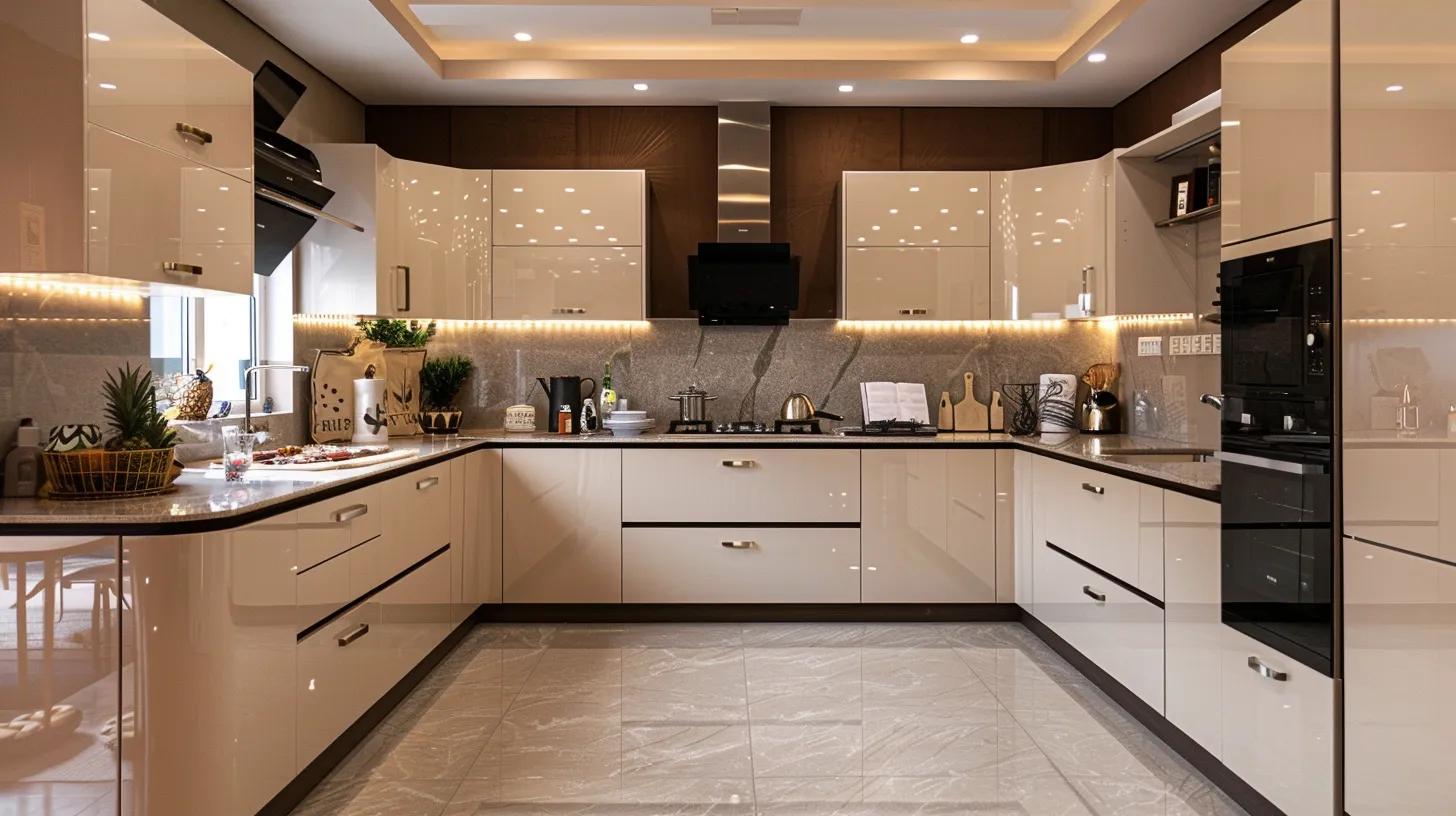
A U-shaped kitchen wraps counters and cabinetry on three sides, delivering continuous work surfaces and abundant storage that make it easier to assign tidy work zones for prep, cooking, and cleanup. This layout minimizes walking distances between appliances and allows multiple drawers and upper cabinets without sacrificing counter area, which is ideal for avid cooks who need staging space. However, a tightly built U-shape can feel enclosed; keeping one leg open to the living area or adding open shelving can reduce the cave effect while preserving storage. Recommended minimum corridor widths are 42–48 inches for comfortable two-cook operation, and designers should consider installing pull-out pantries or shallow upper cabinets to improve accessibility. These considerations show why U-shapes suit storage-first renovations but require attention to circulation and sightlines.
Selecting the best kitchen layout begins with a structured assessment of your room’s dimensions, how you use the kitchen, and any structural constraints that affect plumbing, ventilation, or natural light. A clear decision framework reduces guesswork and focuses renovation choices on measurable factors like minimum clearances, appliance sizes, and budget boundaries that together determine what’s feasible.
Use this checklist to decide on the right layout:
After using this checklist, prioritize layouts that respect the measured clearances and service runs identified earlier. Sell kitchen remodeling and renovation projects to homeowners. Once priorities are listed, sketch options that fit the room envelope and evaluate how each option supports daily flow.
Room size and shape directly constrain which kitchen layouts are viable because circulation, storage, and the possible inclusion of an island all depend on dimension limits and openings. Narrow rooms favor galley configurations that concentrate counters opposite each other, while square spaces tend to accept U-shaped layouts or islands when circulation meets recommended clearances. Minimum recommended clearances include 36 inches for single-cook aisles, 42–48 inches for two-cook zones, and at least 36 inches between an island and perimeter counters when seating is present. Sketching the room to scale and marking appliance footprints helps reveal pinch points and informs whether structural alterations are required. Understanding these dimensional rules lets homeowners judge if a layout needs modification or if a contractor should re-route services to enable a preferred plan.
Lifestyle determines how zones are prioritized: frequent entertainers need open-plan islands and counter seating, while household cooks who prepare multi-course meals require abundant counter and staging areas plus multiple ovens or prep sinks. Households with children may prioritize durable surfaces and easy-to-clean layouts with clear sightlines to living areas, while accessibility-focused designs emphasize lower counters, lever handles, and reachable storage. For multi-cook households, plan overlapping work zones and circulation paths so cooks don’t cross each other’s stations, and consider adding a second prep sink or longer countertops to distribute tasks. Aligning layout choice to cooking habits prevents post-renovation disappointment and helps justify budget allocations toward cabinetry and appliances that will see the most use.
Small kitchens demand smart layout choices that maximize usable surface area while preserving circulation and visual openness. Layouts that perform well in compact footprints include galley kitchens, one-wall arrangements enhanced with slim islands, and compact L or U variations that tuck appliances and storage into efficient linear runs. Lighting strategies, reflective surfaces, and consistent sightlines also make small kitchens feel larger and reduce the sense of confinement. Below are practical layout ideas and quick upgrades that improve function in constrained kitchens.
Practical small-kitchen strategies:
These tactics make a small kitchen more usable and stylish, and they set the stage for focused island or seating solutions that don’t overwhelm the room. When planning, consider whether minor layout shifts—like moving a refrigerator or removing a non-load-bearing wall—could convert a cramped one-wall into a functional L-shape.
The galley kitchen concentrates storage and workflow into two parallel runs, minimizing walking distance and delivering efficient linear work zones for prep, cooking, and cleanup. Recommended clearances for galley kitchens are a minimum of 36 inches between runs for single-cook use and 42 inches for two cooks to avoid congestion during busy periods. Designers often use continuous upper cabinets on one side and open shelving or glass-front cabinets on the other to balance storage with visual openness. For modern galley renovations, consider pull-out storage, shallow pantries, and integrated appliances that preserve aisle width while increasing function. Proper planning of appliance sequencing—sink near dishwasher, cooktop with adjacent prep counter—keeps the galley highly productive.
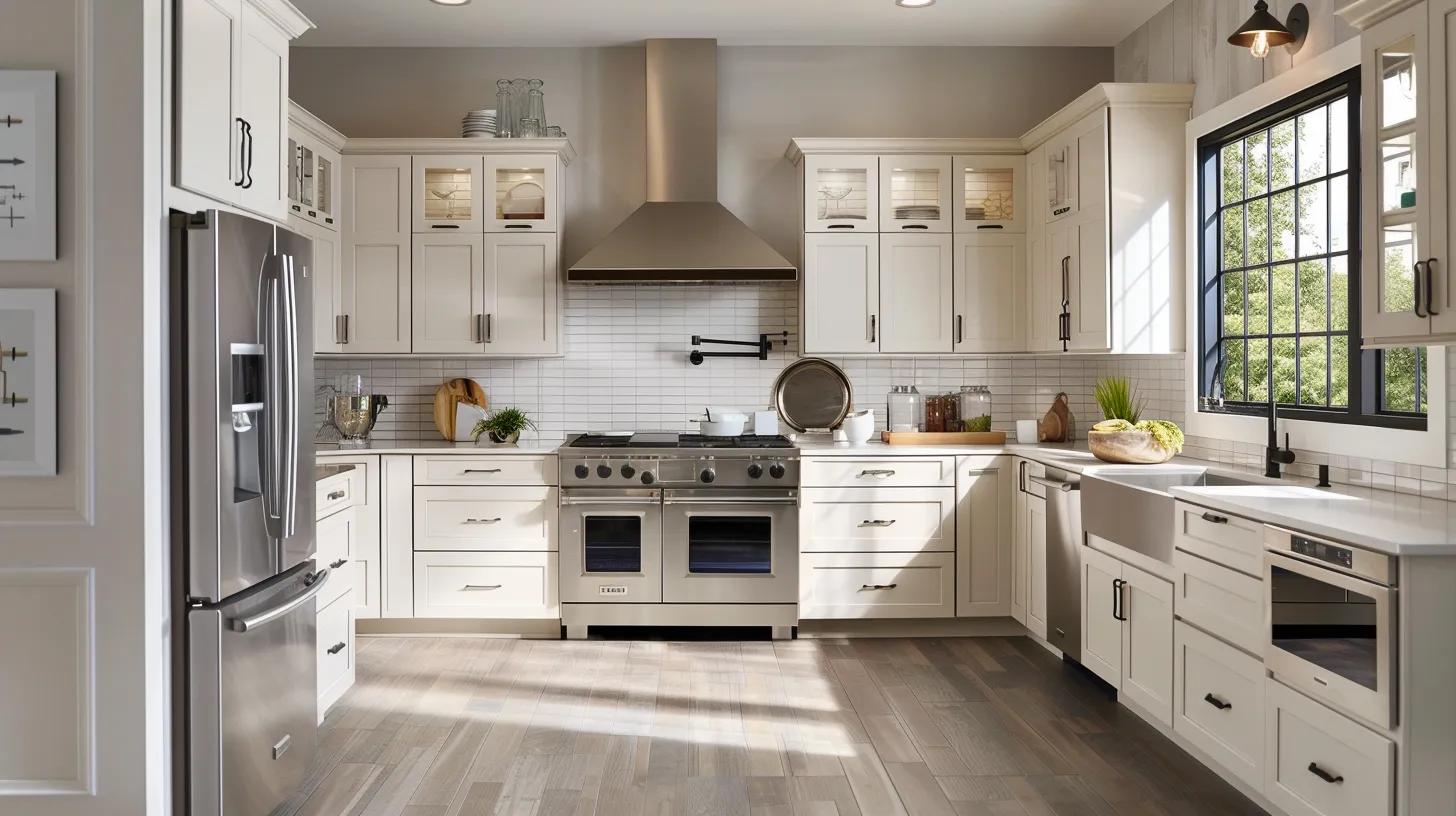
One-wall kitchens place all major elements along a single wall and rely on clever storage, integrated appliances, and added prep surfaces to remain functional in tight units. To elevate a one-wall layout, include a slim island or rolling cart that provides extra prep space and optional seating while keeping circulation open. Choosing multi-function appliances and full-height cabinetry with built-in organizers dramatically increases storage capacity without widening the footprint. Visual strategies—consistent cabinet lines, a continuous backsplash, and matte counter materials—help the one-wall kitchen read as intentional design rather than a compromise. With thoughtful planning, one-wall kitchens can be both compact and refined for studio or condo living.
The kitchen work triangle links three primary points—sink, stove, and refrigerator—to create an efficient workflow that minimizes walking distances and reduces fatigue during food preparation. Traditionally, each leg of the triangle should be between 4 and 9 feet and the total of the three legs should measure between 13 and 26 feet to maintain efficiency; staying within these ranges optimizes movement without crowding. While the triangle remains useful, modern kitchens often adapt it into multiple specialized work zones (prep, cooking, cleanup, baking, beverage) to support multi-cook households and specialized tasks. Understanding triangle guidelines and how they relate to modern zones helps homeowners design layouts that support daily routines and the number of simultaneous users.
Key work-triangle and zone guidelines:
Applying these rules ensures that appliance placement supports natural workflows while modern zones add flexibility for baking, beverage service, or large-batch meal prep. The next step is mapping these zones onto your actual floor plan and verifying clearances.
The traditional work triangle emerged to ensure the most-used appliances are placed to minimize unnecessary steps, thus improving efficiency and reducing strain for cooks. The triangle’s principles guide appliance placement: place the refrigerator, sink and cooktop so that movement between them is direct and unobstructed, and avoid locating any one leg through heavy traffic zones or doorways. This approach remains relevant because it focuses on human movement patterns and ergonomics, helping designers and homeowners evaluate layouts quickly. When combined with correct clearances and counter space at each station, the triangle helps maintain a predictable and comfortable kitchen flow.
Modern kitchen zones break the conventional triangle into purpose-built areas—prep, cooking, cleanup, baking, and beverage—allowing multiple people to work simultaneously without crossing paths. Zones are implemented by placing sinks and prep counters adjacent to refrigeration for quick access, dedicating secondary ovens or cooktops to baking stations, and adding beverage centers or coffee niches away from main prep traffic. Overlapping zones with clear demarcation—such as a dedicated baking pantry near an oven—reduces friction and supports task-based storage. Thoughtful zoning increases a kitchen’s capacity for parallel tasks and is especially beneficial in homes that host frequent gatherings or that have multiple cooks.
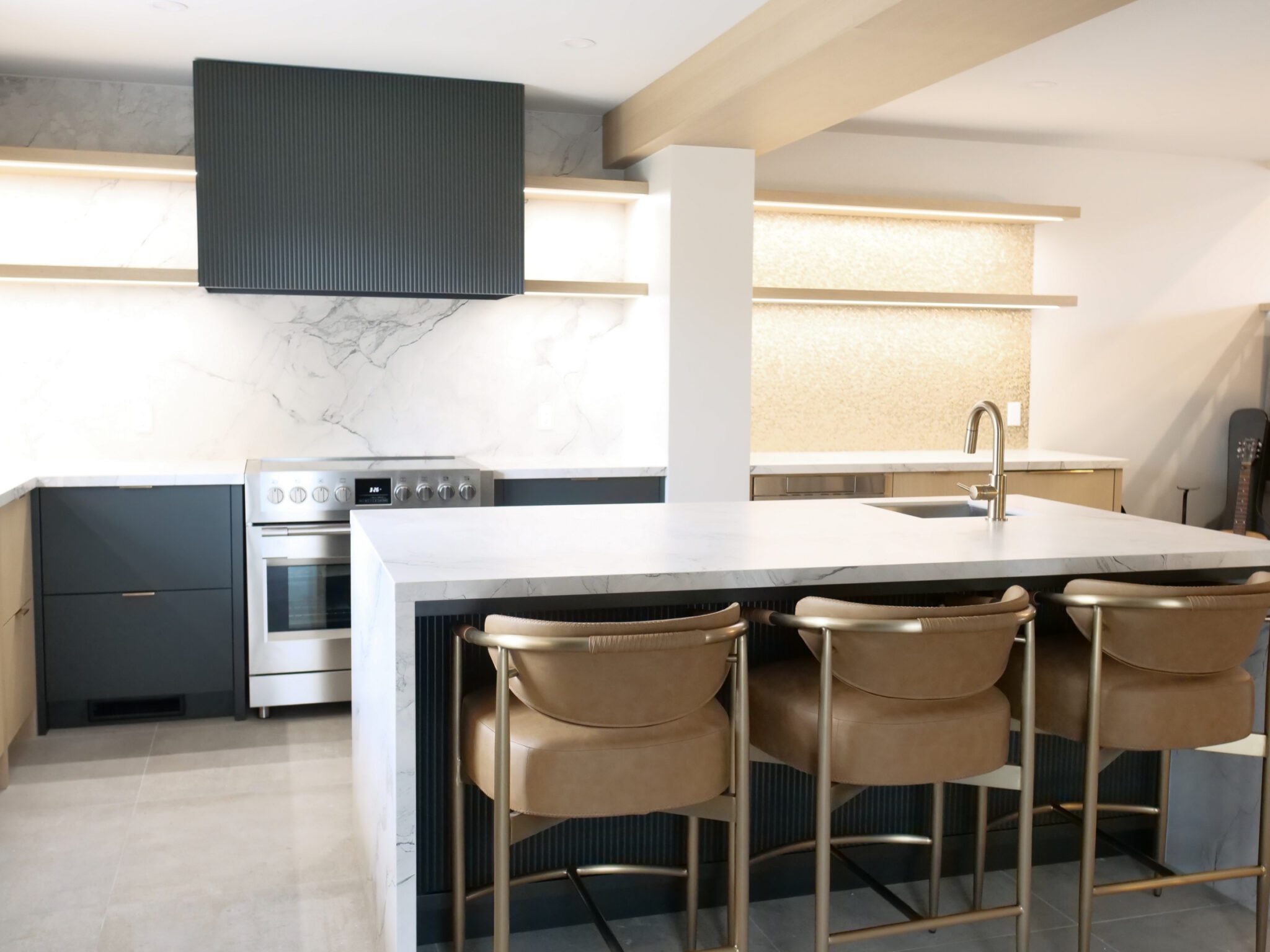
Kitchen islands serve multiple roles: they extend prep surfaces, add storage and appliances, provide seating for social interaction, and become focal design elements that tie finishes together. Adding an island requires attention to clearances around all sides, plumbing and electrical needs if sinks or cooktops are planned, and structural support for heavy countertops. Below is an actionable table showing typical island types, recommended dimensions and their trade-offs to guide decisions about function and scale.
| Island Type / Feature | Recommended Dimensions | Primary Use / Trade-off |
|---|---|---|
| Small prep island | 24–36 in wide × 36–48 in long | Adds counter space; no appliances or seating |
| Seating island | 36–48 in deep with 12–15 in overhang | Provides casual dining; reduces prep depth |
| Appliance island (cooktop/sink) | 48–96 in long; 36–42 in deep | Centralizes work but needs plumbing/electrical |
| Storage-focused island | 36–48 in deep with deep drawers | Maximizes organization; may limit legroom |
Ideal island dimensions depend on intended function: a seating island usually needs at least 36 inches of counter depth with a 12–15 inch overhang for knee space, while a prep-only island can be narrower at 24–30 inches deep. Allow a minimum of 36 inches of clearance on at least one side and 42–48 inches for multi-cook circulation around an island. If adding a sink or cooktop, plan for plumbing and ventilation routes and ensure electrical outlets meet code for cooktop or microwave installations. Feature trade-offs include choosing storage drawers versus seating, and whether to dedicate island space to appliances or keep it flexible for staging and socializing.
Adding seating to an island transforms it into a social hub that supports casual meals, homework, and interaction while cooking, but it also consumes usable prep area and influences traffic patterns. Standard seating requires a 12–15 inch overhang for comfortable leg room and about 24 inches of linear space per person to avoid crowding. Designers should position seating to preserve a clear prep zone and maintain required aisle clearances behind chairs, typically 36 inches minimum for a walk path and 42–48 inches when behind seated guests. Choose stools with a slim footprint or movable seating to maintain flexibility, and consider partial-height islands to delineate zones visually while supporting conversation.
Cabinets, countertops, lighting, and storage systems must be selected in harmony with the chosen layout to ensure function and visual cohesion. Cabinet depth and door swing determine aisle clearance; countertop thickness affects usable surface edge-to-edge; and lighting—layered task, ambient, accent—directly supports each work zone. The table below maps design elements to considerations and recommended approaches so homeowners can align finishes and fixtures to layout goals.
This table links design elements to practical recommendations:
| Element | Consideration | Recommended Approach |
|---|---|---|
| Cabinets | Depth, door swing, pull-out options | Use 24-inch base cabinets, soft-close drawers, and pull-out pantries for accessibility |
| Countertops | Thickness and overhang impact the workspace | Choose 1.25 in–1.5 in thickness for durability; plan overhangs for seating |
| Lighting | Task vs. ambient needs per zone | Layer recessed task lighting over prep, pendant lighting over islands, and under-cabinet lighting for counters |
| Storage | Accessibility and organization | Include deep drawers for pots, vertical dividers for trays, and corner pull-outs |
Cabinet configuration dictates accessible storage and influences aisle widths because door swings and drawer depth require clearance space; designers must choose between full-depth cabinets or shallower uppers to manage visual bulk. Countertop materials with different thicknesses and backsplash treatments alter working heights and edge-to-edge usable surface, while overhangs affect seating ergonomics and aisle clearance. Layered lighting—task lights over prep areas, pendants over islands, ambient ceiling lighting—ensures each zone is usable at all hours and highlights material finishes. Selecting these elements with layout constraints in mind produces a cohesive design that supports both function and aesthetics.
Storage strategies should follow the layout’s strengths: galley and one-wall kitchens benefit from tall pantries, pull-out vertical storage, and high-reach cabinets to maximize vertical real estate, while L- and U-shaped kitchens can incorporate corner solutions, deep drawers, and appliance garages. Islands offer an opportunity for organized drawer banks and recycling centers, while open-plan layouts may incorporate built-in banquettes or buffet cabinets to expand storage. Consider specific products like pull-out spice racks, tray dividers, and drawer organizers to reduce clutter and keep frequently used items within reach. Harmonizing storage solutions with layout ensures daily tasks are faster and cleanup is simpler.
Sell remodeling and renovation projects to homeowners. Castle Contracting & Renovations is a fully insured, full-service renovation team serving the Durham Region and surrounding areas, offering custom homes, kitchen renovations, bathroom renovations, decks and fences, and basement finishing. For homeowners ready to turn a chosen layout into a buildable plan, contacting an experienced contractor can clarify structural constraints, provide cost estimates, and coordinate trades to implement cabinetry, plumbing, electrical, and finishes. Castle Contracting & Renovations can assist with layout implementation and project management; clients often find professional input valuable to avoid costly design changes during construction.
For homeowners seeking implementation support, Castle Contracting & Renovations offers consultation and renovation services with a client-focused approach and full-service solutions.
Choosing the right kitchen layout can significantly enhance both functionality and aesthetic appeal, making your home more enjoyable and valuable. Understanding the various layout types and their benefits empowers homeowners to make informed decisions that align with their cooking habits and lifestyle. For those ready to transform their kitchen, consulting with a professional can provide tailored solutions that meet specific needs.
If you are in search of dependable and top-tier kitchen renovation services in Durham and the surrounding areas, your search ends here. Reach out to Castle Contracting & Renovations today at info@nullcastle-renos.ca or call 905-449-9514 to arrange your complimentary consultation. Embark on the journey to creating a kitchen that truly embodies your style and fulfills your needs!
A. When planning a kitchen layout, consider the room’s dimensions, your cooking habits, and any structural constraints like plumbing and electrical placements. It’s essential to measure the available space accurately and identify how you use the kitchen—whether for single cooking, entertaining, or family meals. Additionally, think about the flow of movement between work zones and ensure that there are adequate clearances for appliances and traffic. This structured approach helps in selecting a layout that maximizes functionality and efficiency.
A. To make a small kitchen feel larger, focus on maximizing vertical space and using light colors. Tall cabinets can draw the eye upward, while reflective surfaces, such as glass backsplashes or shiny countertops, can enhance brightness and create an illusion of depth. Incorporating open shelving instead of bulky cabinets can also help maintain a sense of openness. Additionally, using compact appliances and minimizing clutter will contribute to a more spacious feel, allowing for better movement and functionality.
A. Common mistakes in kitchen layout design include neglecting the work triangle, which can lead to inefficient workflows, and failing to account for adequate clearance around appliances. Overcrowding the space with too many elements can also create a cramped feel. Additionally, not considering the kitchen’s primary use—whether for cooking, entertaining, or family gatherings—can result in a layout that doesn’t meet your needs. Always prioritize functionality and flow to avoid these pitfalls.
A. Lighting plays a crucial role in kitchen layout and functionality by enhancing visibility and creating an inviting atmosphere. Layered lighting, including task, ambient, and accent lights, ensures that each work zone is well-lit for its specific purpose. For instance, bright task lighting over prep areas is essential for safety and efficiency, while softer ambient lighting can create a warm, welcoming environment for social interactions. Properly planned lighting can significantly improve the usability and aesthetic appeal of your kitchen.
A. A kitchen island offers numerous benefits, including additional prep space, storage, and seating options. It serves as a central hub for cooking and socializing, making it ideal for entertaining. An island can also enhance workflow by providing easy access to appliances and work zones. When designed thoughtfully, it can improve traffic flow and create a more open feel in the kitchen. However, it’s essential to ensure that there is enough clearance around the island to maintain functionality and comfort.
A. To ensure your kitchen layout is accessible for all users, consider incorporating universal design principles. This includes installing lower countertops, using pull-out shelves, and ensuring that appliances are within easy reach. Clear pathways should be maintained to accommodate mobility aids, and lever handles can replace traditional knobs for easier access. Additionally, consider the placement of frequently used items to minimize bending or stretching. These adjustments can make the kitchen more user-friendly for everyone, including children and individuals with disabilities.
A. Current trends in kitchen layout design include open-concept spaces that integrate the kitchen with living and dining areas, promoting social interaction. Multi-functional islands are also gaining popularity, serving as both prep areas and casual dining spots. Sustainable materials and energy-efficient appliances are increasingly prioritized, reflecting a growing awareness of environmental impact. Additionally, smart technology integration, such as automated lighting and smart appliances, is becoming common, enhancing convenience and efficiency in modern kitchen designs.
We are a fully insured, full-service renovation team professionally working with our clients for total home renovations. We pride ourselves in completing major house projects. We also specialize in turning unused spaces into fully functioning areas for you and your family to be proud of.